
URL Encoder / Decoder
Component vs full URI, Base64, and a query-string parser — all live.
- No training on your data
- Region: global
URL Encoder / Decoder
Developer & Engineer Toolkit
encodeURIComponent — for query values
URL Encoder — Overview
What is URL Encoder?
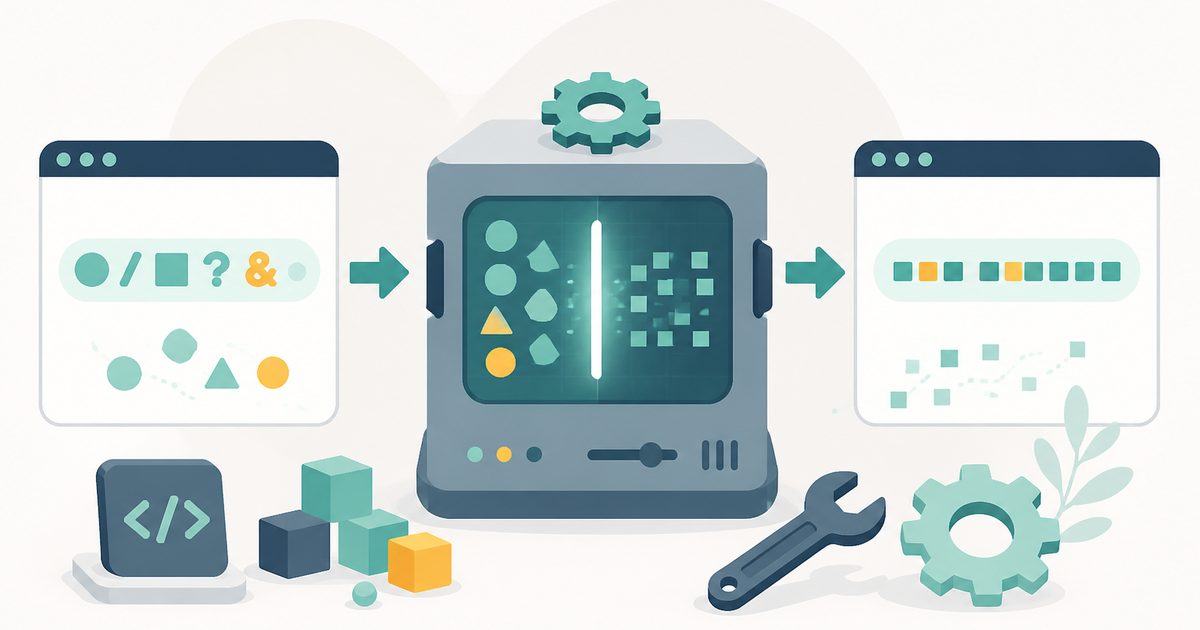
The URL Encoder / Decoder is a simple, non-AI utility designed to convert text into a URL-safe format and decode encoded URLs back into readable form. It is widely used in web development, API integration, testing workflows, and data handling scenarios where special characters must be safely transmitted over the web.
URLs (Uniform Resource Locators) are required to follow strict formatting rules. Certain characters—such as spaces and symbols—can break URL functionality or lead to incorrect interpretations by browsers and servers. To solve this, these characters are converted into a standardized format using percent encoding (also known as URL encoding). The URL Encoder / Decoder automates this transformation instantly.
This tool is not powered by artificial intelligence. Instead, it uses deterministic encoding rules defined by web standards, ensuring that outputs are predictable, consistent, and accurate for every input. It serves as a reliable utility for developers and technical users who need precise control over URL formatting.
What does URL Encoder do?
The URL Encoder / Decoder provides two core capabilities in a streamlined interface:
How to use URL Encoder
- 1Enter Your Input
Paste or type any URL or text string into the input field. The content can include characters that may need encoding or decoding.
- 2Select the Action
Choose whether you want to: - Encode the input into a URL-safe format, or - Decode an existing encoded string back into readable text
- 3View the Result
The tool instantly processes the input and displays the result in a separate output area.
- 4Copy the Output
Use the copy function to quickly transfer the encoded or decoded string into your workflow.
Privacy & cost
This tool runs entirely in your browser. Nothing is uploaded, logged, or saved on our servers — safe for confidential or proprietary data.
Where it fits
Developers frequently encode query parameters, form values, or dynamic routes to ensure they function correctly within URLs.
When sending data through APIs, especially via query strings, encoding ensures that special characters do not break the request.
Encoded URLs can be difficult to interpret. Decoding them helps identify parameter values and diagnose issues.
Certain systems require text to be encoded before it can be transmitted reliably. This tool simplifies that transformation.
QA engineers and testers can verify how URLs behave when encoded or decoded, ensuring systems handle data correctly.
Support teams can decode user-provided URLs to better understand issues or encode links for safe sharing.
Why people pick this tool
- ✓Accuracy: Ensures correct encoding based on standard rules
- ✓Efficiency: Eliminates the need for manual transformation or scripting
- ✓Reliability: Deterministic logic guarantees consistent results
- ✓Ease of Use: Simple interface suitable for both beginners and advanced users
- ✓Time Savings: Quickly completes a common task that would otherwise require code or external tools
- ✓Clarity: Makes URLs easier to inspect and validate during debugging
FAQs
The bottom line
The URL Encoder / Decoder is a focused and essential utility for anyone working with web technologies. By simplifying the process of converting text into URL-safe formats and back again, it removes potential errors and improves workflow efficiency. Its deterministic, non-AI approach ensures that every transformation is transparent, consistent, and aligned with established standards. Whether used during development, testing, or troubleshooting, the tool provides a fast and dependable way to handle URL encoding tasks.
You might also like
More in Developer & Engineer Toolkit
Base64 Encode / Decode
Developer & Engineer Toolkit
Convert between text and Base64.

JWT Decoder
Developer & Engineer Toolkit
Inspect any JSON Web Token.

Cron Explainer
Developer & Engineer Toolkit
Translate any cron expression into English.

CSV to JSON
Developer & Engineer Toolkit
Convert CSV data into clean JSON arrays.

HTML Entities
Developer & Engineer Toolkit
Escape and unescape HTML safely.
JSON Formatter
Developer & Engineer Toolkit
Beautify, minify and validate JSON.